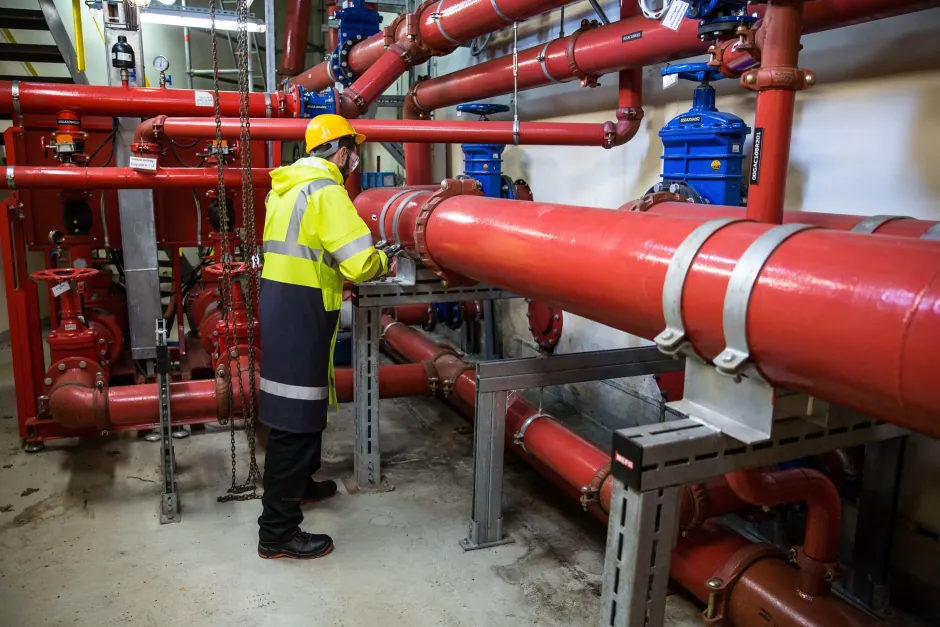
Cooktops, heaters and gas lines installed, tested and certified, with the Certificate of Compliance handed over every time rather than mentioned and forgotten.
Online Now!·--:--
Every gas job produces two things. One is an appliance that works. The other is a Certificate of Compliance, issued by the licensed gasfitter, certifying the work was done to standard.
The first is what people care about on the day. The second is what matters in five years, and on these streets that distinction does real work.
Properties here change hands, and the person who commissioned a job is frequently not the person still dealing with the house later. Nobody's memory of who fitted what survives that. A certificate does.
So we issue one on every gas job, without being asked and without it being an extra. Keep it with the property papers, because an insurer will ask and so will a conveyancer at sale.


Leave the building, touch no switches, turn the meter off only if it is safely on your way, and ring from outside.
A Certificate of Compliance is legally required and is issued by the licensed gasfitter who did the work.
It is the only durable record that an appliance was fitted properly, and it is what an insurer or a conveyancer will ask for.
Gas fitting is licensed work in NSW and there is no small-job exemption.
Work done without a licence cannot be certified, will void a home insurance claim, and leaves nothing behind to show it was safe.
Where there is existing gas work and no paperwork, that is a question worth resolving rather than living with.
A leak test and an honest account of the installation's state costs very little against what it settles.
Certifying a new appliance on a line losing pressure somewhere else achieves nothing.
So the installation gets pressure tested, and anything else wrong is priced rather than vaguely mentioned.
The certificate is small, easily lost, and worth a great deal at exactly the moment nobody can find it.
File it with the deeds and the other compliance documents rather than in a kitchen drawer.
Fixed price agreed before anything starts. These are indicative 2026 ranges and the Certificate of Compliance is included in every one of them.
The installation pressure tested, with a written result.
Connected, tested and certified, with the certificate handed over.
Depending on the run and what it has to pass through.
Installed and certified, sized for the appliance rather than for convenience.
Legally required, issued every time, and the part that lasts.

And whether there is paperwork for it. Inherited work with no certificate is worth knowing about before we add to it.

A pressure test on what we are connecting to, so nothing gets certified over an existing fault.

Installed and commissioned properly, sized for the appliance rather than for whatever was easiest.

Issued on the spot, and worth filing with the property papers rather than a kitchen drawer.
Leave the building first, then ring us from outside. Do not touch a switch on the way out.
Call 1300 381 569
Get everyone outside first. Do not touch any switch, including lights, and do not use a phone indoors. If the meter is safely on your way out, turn it off. Then ring from outside. This is the one situation where leaving and doing nothing else is exactly right.
It is the document a licensed gasfitter issues certifying that gas work was done to the standard. It is legally required, and it is the only durable record that the work was done properly. We issue one on every gas job without being asked.
Because it is the part that outlives whoever ordered the work. On a mixed-tenure estate the person commissioning a job is frequently not the person who will still be dealing with the property in five years, and memories of who did what do not survive. The certificate does. Insurers ask for it, conveyancers ask for it at sale, and it is what tells a future owner the appliance was fitted by somebody licensed.
No. Gas is licensed work in NSW with no exemption for a small job or a capable owner. Unlicensed work cannot be certified, which means it will void a home insurance claim and leave nothing on record that it was ever done safely.
Have it checked. If there is no certificate and no record, that is worth resolving rather than wondering about, particularly before a sale. We can test the installation and tell you plainly what state it is in.
Yes. Certifying a new appliance on a line that is losing elsewhere achieves nothing, so we pressure test what we are connecting to. If something else is wrong you hear about it before we leave, with a price attached.
A leak test on the installation is $150 to $300. A cooktop connected and certified is $250 to $500. A new gas point run and certified is $450 to $1,200 depending on the run. A heater bayonet is $300 to $600. The compliance certificate is included in all of it.
Tell us what you want fitted and whether there is existing gas work with paperwork. Those two answers shape the quote.
Whole installation tested, certificate issued as standard, and the licence number on the quote before you agree to anything.
Online Now!·--:--